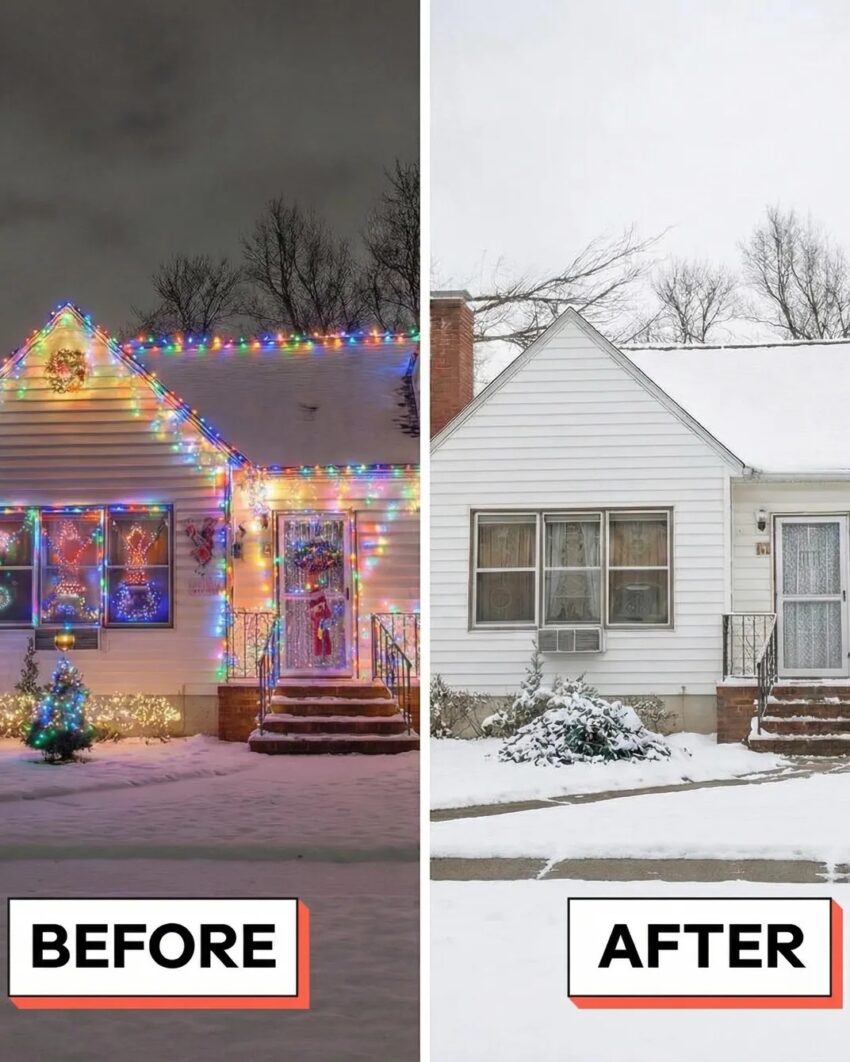
Three months after my divorce, I was doing everything I could to keep life steady for my five-year-old daughter, Ella. I promised her Christmas would still feel magical, even if everything else felt uncertain. So after long shifts at work, I hung lights across our little house, placed ornaments along the porch rail, and tried to stitch joy back into the edges of our new life. But one evening, when I pulled into the driveway, something felt wrong. The lights were gone. Ornaments were smashed and scattered. Even Ella’s thumbprint keepsake lay cracked beside the steps. A trail of muddy footprints led straight to my neighbor Marlene’s home—a woman who had made it clear since day one that she disliked noise, decorations, and, it seemed, us. Anger surged through me as I marched toward her door, ready to demand answers.But when Marlene opened the door, the words I’d prepared dissolved. She didn’t look irritated or smug; she looked devastated. Eyes red, hands trembling, she stepped aside and let me in. Her walls were lined with photos—holiday mornings, birthday celebrations, faces full of life and love. And then she told me the truth: she had lost her husband and three children twenty years earlier, just before Christmas. Every twinkle light, every cheerful song, every burst of festivity scraped against an old wound she had never healed. My decorations weren’t the problem; the memories they awakened were. She hadn’t intended to destroy anything—she had simply reached a breaking point. Hearing her apology, raw and remorseful, shifted something in me. Her loneliness sat heavy between us, and I realized her outburst came not from cruelty, but from longing.I thought of Ella, of her cracked ornament and hopeful eyes. I also thought of Marlene’s empty December nights. So instead of leaving in anger, I asked her to come help me put everything back up. She hesitated, surprised, but eventually followed me outside. Together, we repaired what we could and rehung the rest. When Ella arrived home, she didn’t scold or question—she simply asked Marlene if she wanted to “learn how to like sparkle again.” That childlike grace softened something in Marlene. She helped us finish the display, clipping a tiny wooden angel onto a new string of lights. It wasn’t perfect, but it glowed with a quiet warmth neither of us expected.On Christmas Eve, Marlene knocked on our door holding a tin of cookies and wearing the shyest smile. Ella pulled her inside and announced she was now our “Christmas grandma.” We shared dinner, stories, and a gentle space for the names of the people she missed. It wasn’t the glossy holiday I once imagined—but it felt honest, healing, and full of unexpected grace. As the porch lights glowed softly and Ella leaned against Marlene’s shoulder, I realized two broken families had stitched themselves into something whole. Our house still isn’t the brightest on the block, but the warmth inside it is real—and for the first time in a long time, Christmas felt like it belonged to all of us.