
When rescuers first laid eyes on Ozgur, they could barely believe he was still alive. Locked away in a pitch-dark, filthy cell, the neglected Pit Bull had endured unimaginable suffering. His thin, frail body bore the evidence of prolonged starvation and utter abandonment. Covered in deep, festering wounds, his skin was raw in many places, and the stench of infection clung to the air around him. Yet, perhaps most heartbreaking of all were his eyes—empty, distant, and resigned. They were the eyes of a soul who had long ago stopped believing in kindness.
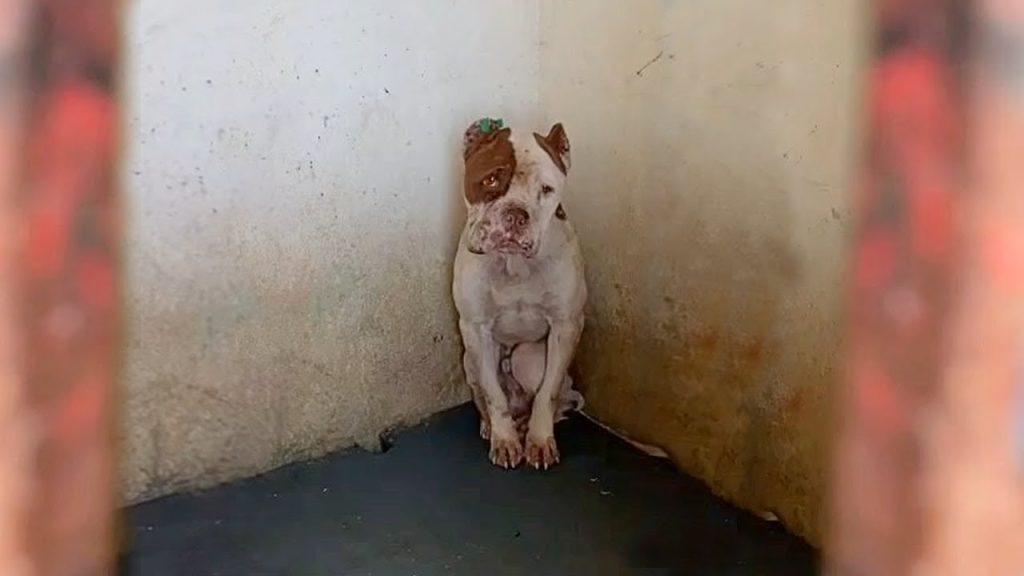
Ozgur had likely spent his entire life in that miserable prison, with no light, no love, and no touch that wasn’t cruel. No one knows exactly how he got there or how long he had been confined, but it was clear that his spirit had been broken by years of neglect. His limbs trembled under his own weight, his ribs protruded sharply through his skin, and his body was covered with bruises and untreated injuries. It was a miracle he had survived at all.
Once in the care of a rescue team, the priority was to get him to safety—and fast. The journey to the veterinary clinic was made with urgency, but also with care. Every bump in the road was felt in his fragile frame, so the team made sure to cushion him gently. Upon arrival, the veterinary staff acted quickly and with incredible tenderness. Pain relief was administered first, followed by IV fluids to rehydrate him and strong antibiotics to begin fighting the infections that had ravaged his body.
Feeding him was a delicate task. Because his body had been starved for so long, introducing food too quickly could be fatal. A special plan was crafted to help him gain weight gradually and safely. Every meal was prepared with precision and offered with quiet encouragement. As the days passed, the veterinary team began to notice small signs of progress—tiny but powerful moments that hinted at Ozgur’s will to live.
At first, he remained silent and withdrawn, flinching at sudden movements or unfamiliar voices. But with each passing day, his eyes began to change. The vacant stare was slowly replaced by curiosity, then cautious hope. He started to respond to gentle touch and to recognize the faces that visited him often. He still didn’t understand what love truly meant—but he was learning.
Ozgur’s wounds began to heal, one by one. The infected sores dried and closed. His strength started to return, and he could finally lift his head without trembling. His once-motionless tail gave its first hesitant wag. And then, in a moment that brought tears to many eyes, he reached out with his paw—just slightly, just once—as a gesture of connection.
It wasn’t long before that small gesture became a full transformation. The quiet, broken dog was beginning to bloom. He learned to walk again, to run short distances, and eventually to play. The sight of him chasing after a soft toy brought a flood of emotion to the rescuers who had witnessed his condition on day one. Each joyful bark and tail wag was a celebration of his rebirth.
The most powerful part of Ozgur’s recovery, however, was not just physical—it was emotional. He had come to trust people again. He leaned into their hands, sought out affection, and even initiated cuddles. His face, once tight with pain and fear, now relaxed into smiles. He loved belly rubs, soft blankets, and the simple pleasure of lying in the sun.
The bond he formed with his primary caregiver was especially touching. In one unforgettable scene, captured at the end of the video, Ozgur nuzzled her face lovingly, tail wagging, eyes filled with gratitude. There was no fear in him anymore—only joy, connection, and trust. It was the kind of moment that reminds us why rescue work matters so deeply.
Ozgur’s transformation is more than just a recovery—it’s a triumph of the spirit. He went from complete isolation to discovering the beauty of companionship. From pain and starvation to laughter and full bowls. From being unseen and forgotten to becoming a symbol of hope and resilience.
This story is a powerful reminder of what love and patience can do. It shows that even those who’ve suffered deeply can heal when given the chance. It also reflects the strength and courage of animals who continue to love, despite everything they’ve endured. Ozgur didn’t just survive—he thrived. And in doing so, he changed the lives of everyone who helped him along the way.
To see a dog like Ozgur go from near death to full of life is nothing short of miraculous. And yet, these miracles are made possible every day by those who choose to care—who choose to act. The work of rescue organizations and veterinarians, the kindness of volunteers, and the generosity of people who give even a little, all contribute to stories like his.
Ozgur now lives the life every dog deserves. He plays in the grass, naps in cozy beds, and greets every morning with excitement. He is no longer defined by his past but by the love he now knows. His story is not just about survival, but about rebirth. It’s a story that touches hearts and renews faith in the power of compassion.
For those who’ve ever doubted whether change is possible, let Ozgur be your answer. Healing takes time. Trust takes patience. But love—real, unconditional love—has the power to rewrite even the darkest of beginnings.
And sometimes, that’s all it takes to save a life.