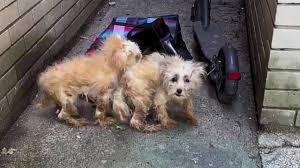
I found them tucked into a street corner, two small shapes pressed against the pavement, as if the city had already taught them not to be seen. They were in terrible condition—far too weak for how young they were. Their fur was long, knotted, and heavy with dirt, matted so badly it pulled at their skin with every movement. They were terrified. When I stepped closer, they ran—not far, just enough to protect the little distance they still had. It felt like they had lived this way for years, ignored and unwanted.
When I finally reached out slowly, something changed. They stopped. They didn’t fight. They surrendered. Their bodies trembled, soft moans escaping—not aggression, only fear from lives that had never known gentleness. I named them Vida and Danka.
At the clinic, we worked carefully. The shearing revealed bodies hidden beneath neglect. They shook the entire time, unused to kind touch. After bathing and examinations, we learned Vida would recover with care. Danka wouldn’t—she was in pain. A stone the size of a quail’s egg was lodged in her bladder. Surgery saved her.Days later, the sisters were reunited and soon adopted together by a woman named Marijana. Today, Vida and Danka are playful, loved, inseparable—and finally home.