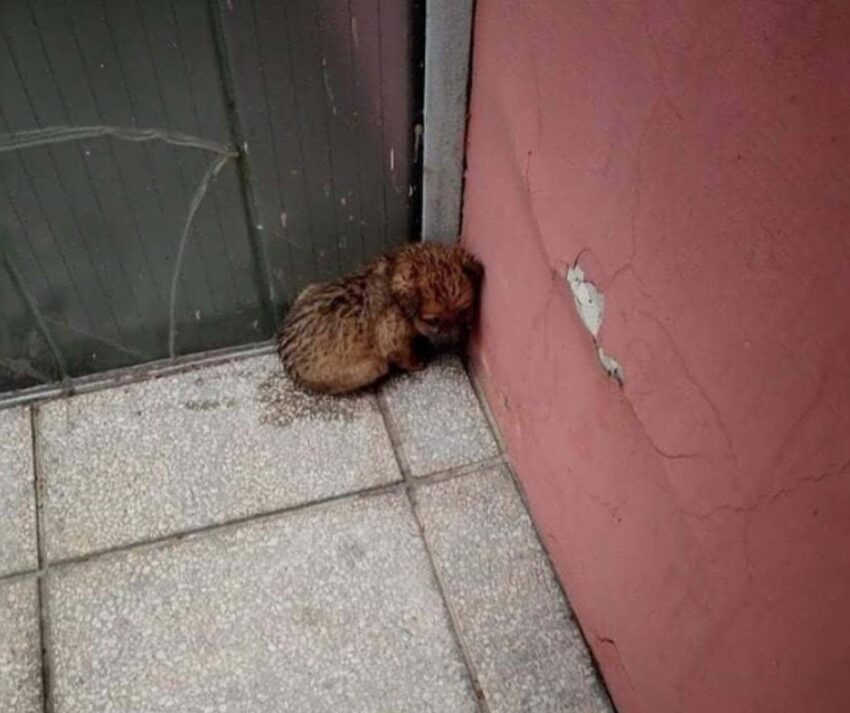
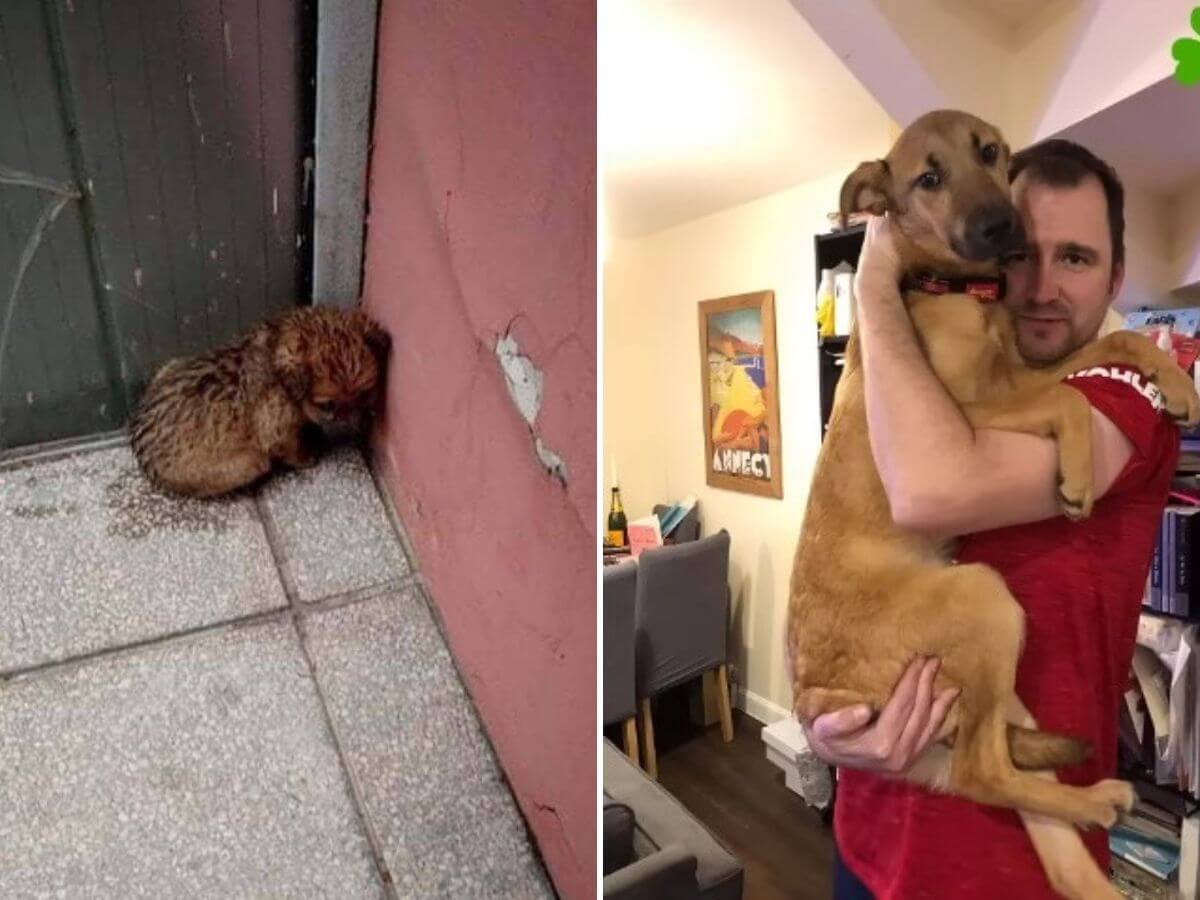
The photo was impossible to forget.
A tiny puppy was curled into a corner, soaked from the rain, her body pressed against cold concrete. She was trembling. Alone. Too small to defend herself. According to the rescuer who later stepped in, she had been there for three days. During that time, crows attacked her fragile body, leaving wounds across her skin.
Someone took the photo. Then they walked away.
That image reached Edina Pasic, who recognized what it showed and acted immediately. The puppy was still alive, but barely.
As Edina later described the moment, the disbelief had not faded:
“This baby has been there for 3 days… but no one want to help!”
Three Days in the Rain Before Help Arrived
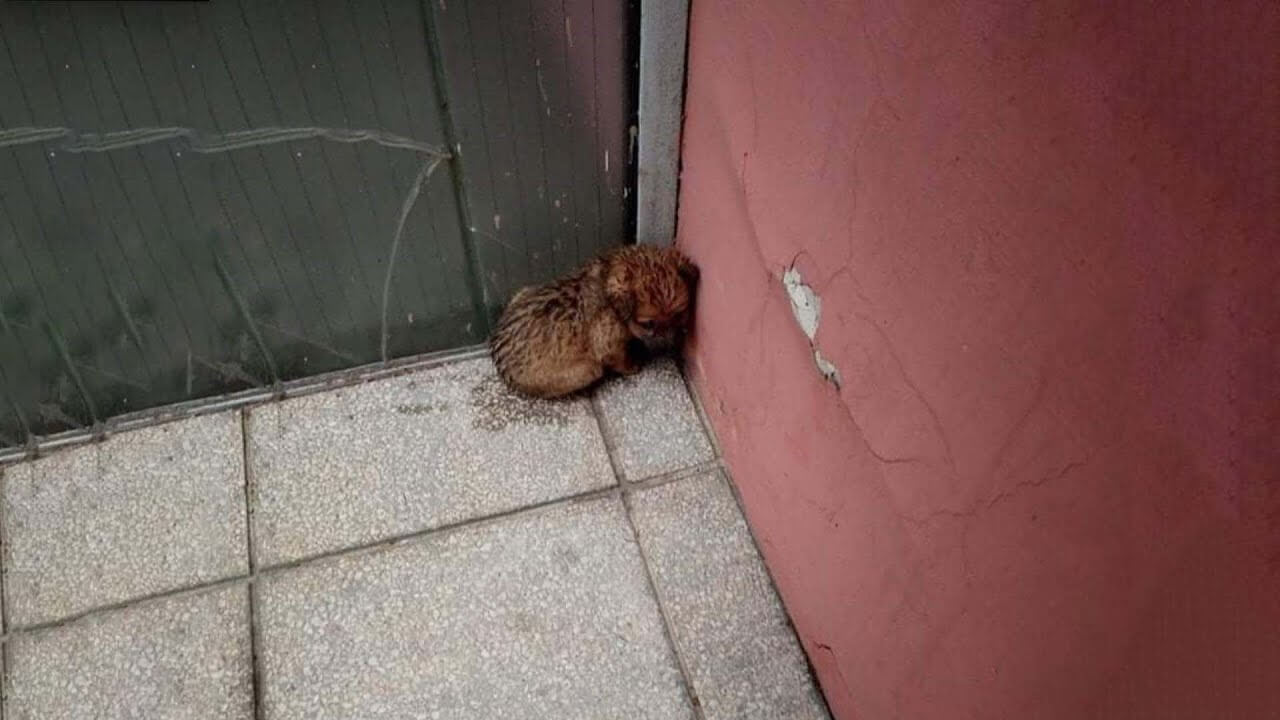
When Edina reached the puppy, later named Grace, her condition matched the photo. She was wet, exhausted, and hiding in a corner as if trying to disappear. Her body carried multiple wounds where crows had pecked at her while she waited in the open.
Grace weighed just two kilograms.
Puppies this small decline fast when exposed to cold and rain. Veterinary guidance explains why.
VCA Animal Hospitals notes that “a newborn puppy cannot control its body temperature and depends on radiant heat from its mother’s body to help maintain its body temperature.”
Grace had none of that protection. No warmth. No shelter. No mother nearby.
Edina rushed her straight to the veterinarian.
A Diagnosis That Changed Everything

At the clinic, the situation became even more serious. Tests confirmed that Grace was positive for parvovirus and coronavirus, two dangerous infections, especially for a puppy her size.
Parvovirus alone can be devastating.
PetMD explains that “there is no specific cure for parvovirus in dogs and puppies, so treatment revolves around supporting a pup so their body can fight it off.”
Grace was admitted immediately. Treatment began with fluids, antibiotics, and constant monitoring. But within days, her condition worsened.
When Survival Was Unclear
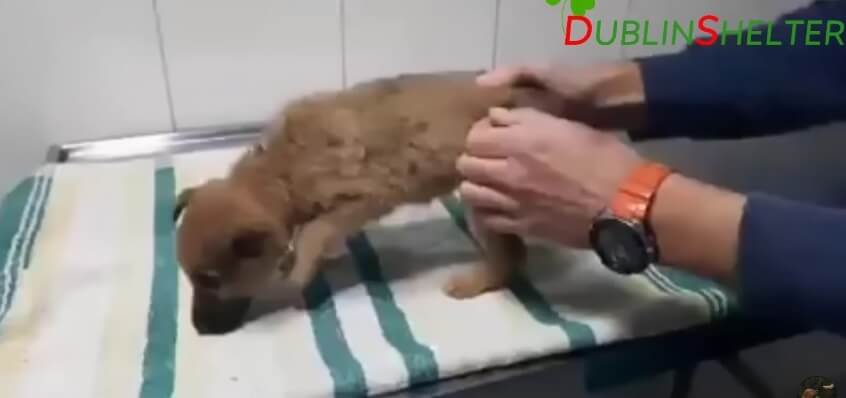
By day three of treatment, Grace stopped eating. Blood appeared in her stool. Her weight dropped rapidly. At one point, she weighed less than a kilogram. She was so small she could fit into a single hand.
Edina stayed with her through the nights when clinics were closed and returned to the vet every morning. IV lines were replaced. Wounds were shaved and cleaned. Infections began to drain.
At the height of the crisis, Edina shared a single update that captured the reality of those days:
“The situation is now very critical!”
Veterinary experts warn that even with care, outcomes are uncertain.
The American Veterinary Medical Association states that “no specific drug is available that will kill the virus in infected dogs, and treatment is intended to support the dog’s body systems until the dog’s immune system can fight off the viral infection.”
Grace’s survival depended on time, support, and whether her body could hold on long enough to respond.
Small Signs That Meant Everything
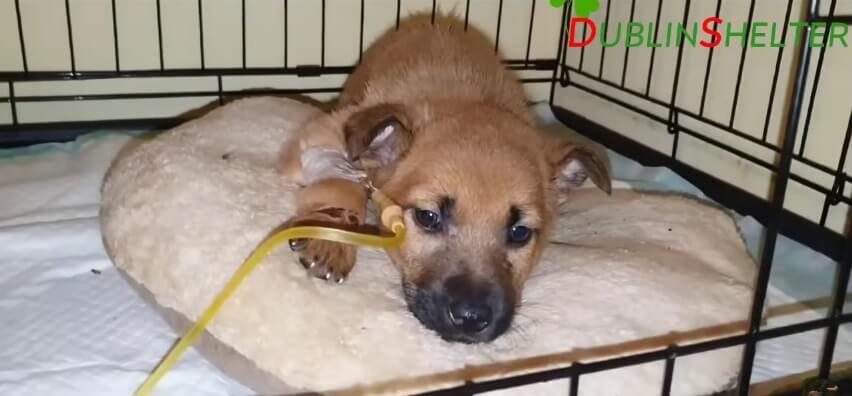
Days blurred together. IVs continued. Vomiting and diarrhea persisted. But then something small changed.
When Grace heard Edina’s voice, her tail began to wag.
It was a tiny movement. But it mattered. Her eyes looked more alert. She started responding instead of fading.
By day twelve, Grace showed interest in food again. Slowly, she began licking small amounts. The worst days were not over, but the direction had shifted.
When the Fight Turned
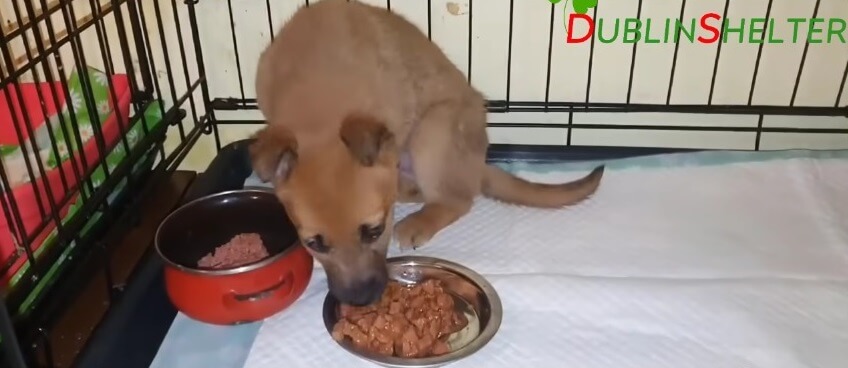
By day fourteen, Grace was eating on her own, still slowly, still carefully. Therapy continued. Infusions were reduced as her strength returned.
On day twenty, Edina shared the words she had been waiting to say.
Parvo had lost.
Weeks later, Grace no longer resembled the puppy left in the rain. Her body was stronger. Her wounds healed. Her eyes were bright and curious.
A Life After Survival
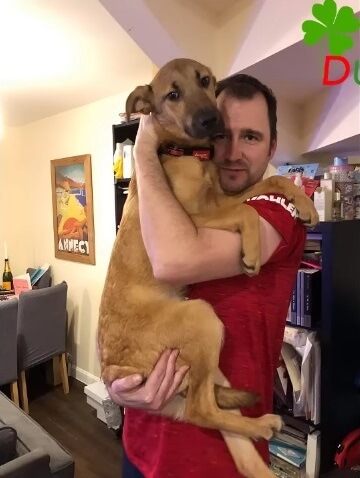
Grace moved into a foster home, where she was surrounded by care and attention. She adjusted quickly, soaking up affection she had never known.
Then came the final chapter.
Two and a half months after being rescued, Grace traveled to the United Kingdom, where she was adopted into her forever family.
Her story was later shared through a video on the Dublin Shelter YouTube channel, using the rescuer’s own words to document each stage of the fight.
Why Grace’s Story Matters
Grace survived because one person stopped.
She survived because someone chose action over indifference, even when it would have been easier to look away.
Stories like this remind us how much can change when one person decides that a life in front of them is worth saving.
If this story stayed with you, consider sharing it so more people see what stopping can mean.