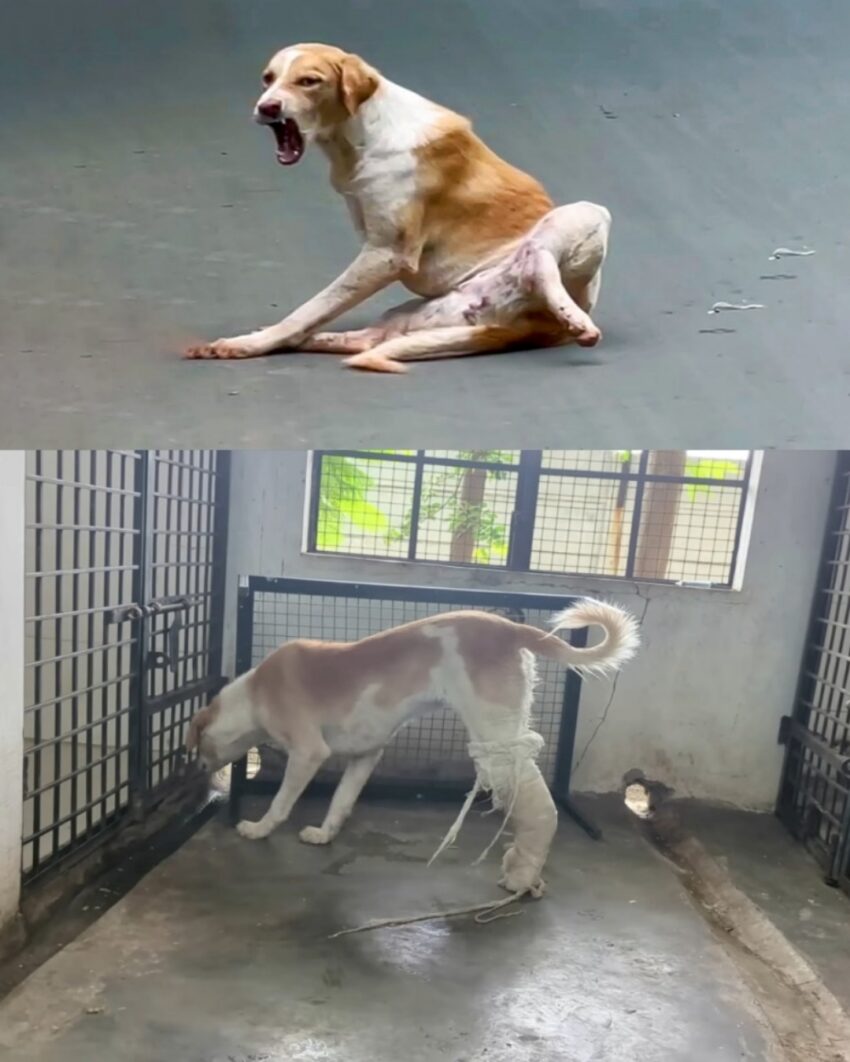
In the hushed aftermath of a sudden accident, when the world seemed to pause in a fragile, uneasy silence, a dog named Tilu lay on the roadside. The air was still, broken only by his soft cries and the gentle rustle of leaves stirred by the breeze. His small body was twisted in pain, breath shallow, fear settling deep into his bones. The road that moments earlier had been alive with movement now felt distant and indifferent, as if nothing extraordinary had happened at all.
But something extraordinary had happened.

Beside Tilu stood his loyal companion, another dog who refused to leave him. While Tilu lay helpless, his friend paced anxiously, releasing distressed sounds that cut through the quiet. Those sounds carried urgency. They carried love. And they carried just far enough to reach the ears of a few passersby who slowed, then stopped, drawn by a scene that could not be ignored.
What they saw changed them.

A dog injured and unable to move.
Another standing guard, refusing to abandon him.
A moment where looking away would have been easier.
Instead, they chose compassion.

Without knowing Tilu’s story or his future, these strangers made a decision that would alter the course of a small life forever. They carefully lifted him, spoke softly, and rushed him to the nearest shelter, hoping they were not already too late. It was an act born not from obligation, but from empathy — the simple recognition that suffering should never be left alone.
At the shelter, the atmosphere shifted from shock to focused urgency. Veterinarians and staff moved quickly, assessing the damage, stabilizing Tilu, and doing everything possible to ease his pain. X-rays revealed the harsh truth: multiple fractures, severe wounds, and injuries too extensive to repair fully. His body had endured more than it could carry intact.

The decision was devastating, but necessary.
To save Tilu’s life, his leg would need to be amputated.
There is a particular heaviness that comes with decisions like this — the knowledge that survival will come at a cost. But within that weight also lived hope. Hope that life, even changed, could still be good. Hope that pain could give way to healing.
The surgery was long and difficult, demanding skill, precision, and care. When it was over, Tilu lay quietly, wrapped in warmth, his body altered but his heart still beating strong. He had survived the accident. He had survived the operation. Now, he faced the long road of recovery — a journey that would test not only his strength, but his spirit.

The days that followed were slow.
Pain medication eased his discomfort. Bandages were changed with gentle hands. Soft voices surrounded him, offering reassurance even when he could not understand the words. At first, confusion clouded his eyes. His body felt unfamiliar. Balance was difficult. Movement required effort he had never known before.

But Tilu did not give up.
Day by day, he learned his new body. He shifted his weight. He tried again after slipping. He rested, then tried once more. The shelter staff noticed something special — not just resilience, but determination. Tilu wagged his tail. He greeted caregivers with curiosity. He accepted affection freely, as if grateful not just to be alive, but to be cared for.