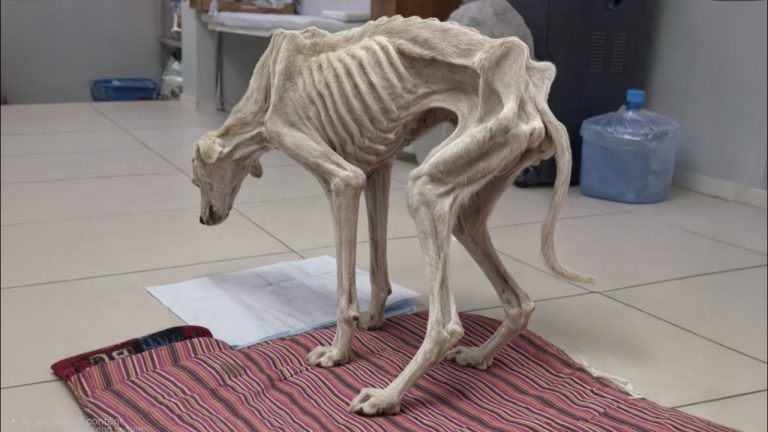
Air was discovered lying on the side of a busy road, his body broken and his spirit shattered. Abandoned by the very person he once trusted, he had been struck by a passing car and left alone to endure the pain. There was no familiar voice calling his name, no comforting hand to reassure him. Only the cold pavement beneath him and the heavy silence of betrayal.
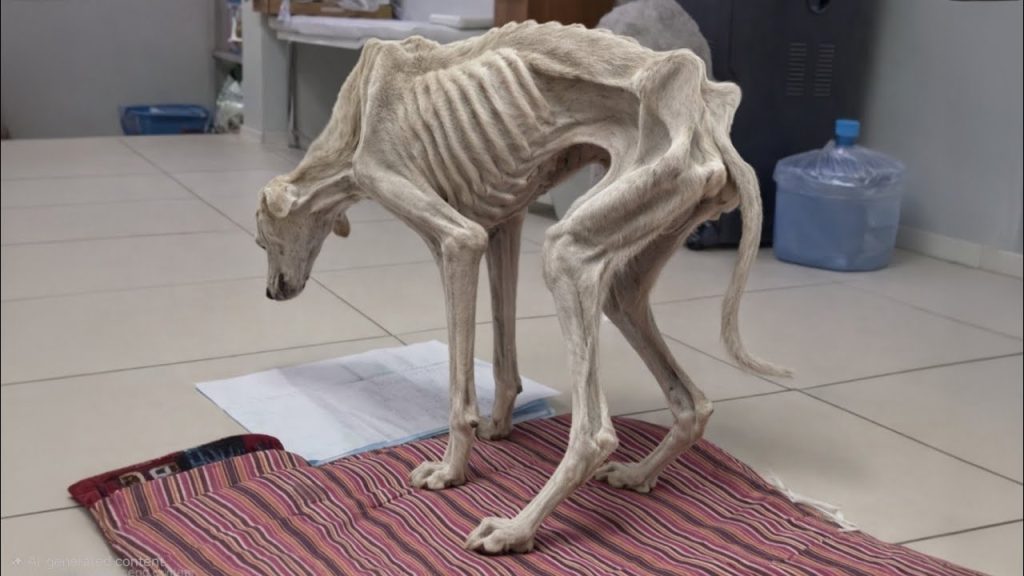
When rescuers reached him, they found more than physical injuries. They found a dog who had lost hope. The trauma of being discarded and then hit by a vehicle had taken a devastating toll. His body was frail, trembling from shock and exhaustion. But even more heartbreaking was the emptiness in his eyes. He had stopped fighting.
In the days that followed, Air refused food. He turned his head away from every bowl placed before him. Grief consumed him. The loss of his family seemed to wound him more deeply than the accident itself. Without nourishment, his body withered. His ribs became visible, his muscles weakened, and he grew so thin that it seemed as though he might simply fade away. Caregivers feared that if he continued on this path, he would not survive.
Medical examinations revealed the severity of his injuries. Surgeons worked carefully, doing everything in their power to repair the damage to his leg. The first operation offered hope, but complications arose. A second procedure followed, then a third. Each time, his body struggled to heal. Infection and instability threatened his recovery, and veterinarians began to consider the possibility that amputation might be the only remaining option.
For many animals, three failed surgeries would signal the end of the road. But Air’s rescuers refused to surrender to despair. They saw something in him worth saving. They adjusted treatment plans, consulted specialists, and remained steadfast in their commitment. Their determination became the quiet force that carried him forward when he had no strength of his own.
Yet physical healing was only part of the battle. Air’s emotional wounds ran just as deep. He remained withdrawn, uninterested in the world around him. His kennel felt less like a place of safety and more like a space of isolation. Caregivers understood that medicine alone could not restore his will to live. He needed connection.
That turning point came when he was gently introduced to other dogs at the shelter. At first, he watched from a distance. Cautious. Unsure. But the simple presence of other animals—wagging tails, soft nudges, shared spaces—began to stir something inside him. Companionship awakened a memory of belonging.
Gradually, Air responded. A small lift of his head. A tentative step closer. The sight of other dogs playing and resting together reminded him that life could still hold warmth. He was no longer alone in his suffering. The energy of the group, the quiet acceptance from fellow survivors, gave him a reason to try again.
With this emotional breakthrough, his medical team moved forward with renewed resolve. He underwent three additional surgeries in close succession. This time, something was different. His body, strengthened by renewed determination and improved nutrition, responded positively. Each procedure succeeded where the earlier attempts had faltered. Stabilization improved. Healing progressed. The feared amputation was no longer necessary.
Keeping his leg was more than a surgical victory. It symbolized resilience. It represented the power of persistence, both human and canine. Air had faced abandonment, physical trauma, repeated medical setbacks, and profound despair. Still, he endured.
As weeks passed, his appetite returned. Meals were no longer ignored; they were welcomed. Weight slowly returned to his fragile frame. Muscle began to rebuild. His eyes, once dulled by grief, regained a spark of curiosity. Caregivers noticed him observing visitors, responding to gentle voices, even offering small signs of trust.
Today, Air is thriving within a foster care program designed to support his continued rehabilitation. In a quiet home environment, he is regaining strength at his own pace. Structured therapy helps him relearn proper movement. Short, supported walks gradually build endurance. Each day brings measurable progress.
He now approaches his food bowl eagerly. He rests comfortably on soft bedding. He interacts with his foster companions, no longer as a withdrawn patient but as a participant in daily life. There are still challenges ahead—rehabilitation requires patience and consistency—but the trajectory is hopeful.
Air’s story carries a profound message for anyone who has ever felt broken by loss. Physical injuries can be treated with skill and dedication, but emotional wounds require something deeper: connection. The companionship of other dogs reignited his will to survive. The unwavering commitment of his rescuers provided the stability he needed to recover.
For many readers, especially those who have known heartbreak or unexpected hardship, Air’s journey resonates on a deeply human level. It reminds us that despair does not have to be permanent. Even when circumstances seem overwhelming—when repeated efforts fail and outcomes appear uncertain—persistence can lead to transformation.
Friendship, whether between animals or people, has the power to restore what trauma attempts to erase. A broken spirit can mend when surrounded by patience, kindness, and community. Air’s recovery was not instant. It required time, medical expertise, and emotional support. But step by step, he moved from abandonment to belonging.
His life today stands as living proof that resilience often emerges quietly. It grows in the presence of care. It strengthens through shared experience. And sometimes, it takes the simple presence of another heartbeat nearby to remind us that we are not meant to struggle alone.
Air’s journey is not just about survival. It is about rediscovering hope after betrayal, finding strength after repeated setbacks, and learning to trust again. In that way, his story speaks far beyond the walls of a shelter. It speaks to anyone who needs reassurance that even the most wounded spirit can rise again.