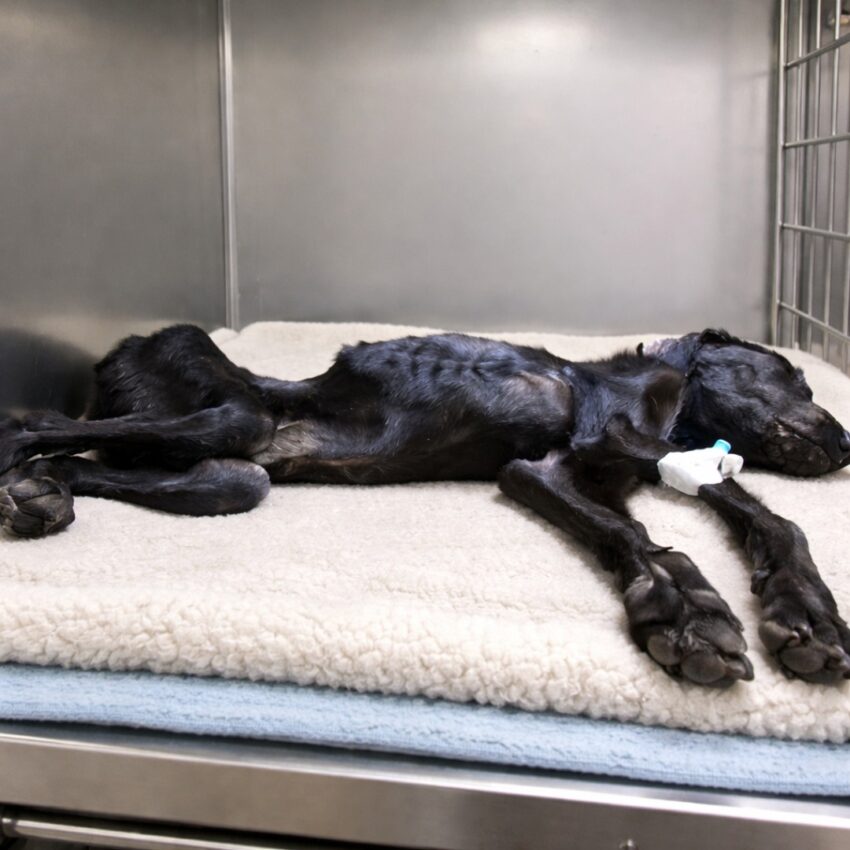
Bucky was caged inside a small concrete corner behind a rural home. There was no blanket, no clean water, and no way out. The only things within reach were broth and stale bread that did little more than delay hunger.
His owner had disappeared. No note. No explanation. No return.
When rescuers eventually reached him, they found a dog who had been hanging on through what experts describe as one of the most dangerous forms of cruelty: slow starvation.
According to the Shelter Medicine Program at the University of Wisconsin–Madison, starved animals face life-threatening organ stress and require extremely controlled feeding when found in this condition.
Bucky had waited alone for days. Maybe weeks. Long enough for his body to shrink to a trembling frame. Long enough for fear to become his only companion.
And yet, when help arrived, he tried to stand.
What Severe Neglect Really Looks Like
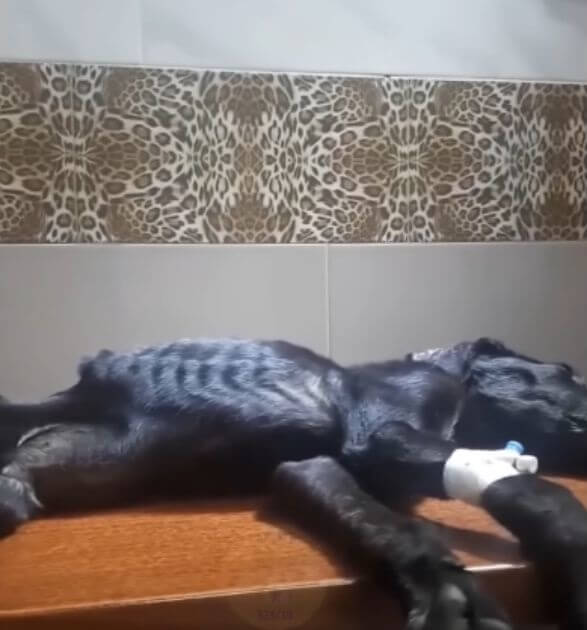
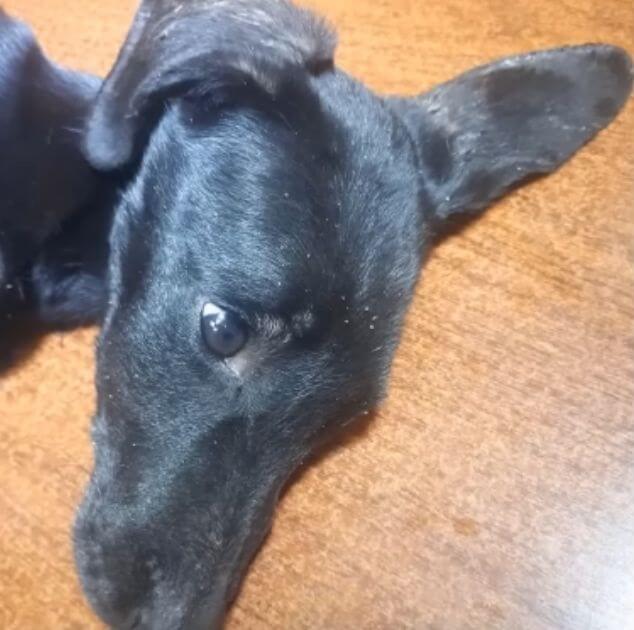
Inside the cage, the rescuers found a dog weighing just 5.4 kg, far below a safe range for his age and size. His ears were infected, writhing with maggots. One ear was partially missing. His body temperature was dropping.
The moment we opened the cage, it was clear he had been suffering for a long time. He wasn’t fighting us. He was just exhausted. At that point, our only focus was keeping him warm and getting him help as fast as possible. – One of Bucky’s rescuers.
To an untrained eye, a starving dog may look sleepy or quiet, but veterinarians warn that appetite loss is one of the clearest medical emergencies. VCA Animal Hospitals describes anorexia in dogs as a red flag that often points to deep physical stress or systemic illness.
The rescuers lifted him carefully, aware that sudden movement could make his fragile body collapse. His head rested gently on a volunteer’s arm. His eyes didn’t show recognition or expectation—only confusion.
He hadn’t seen compassion in a long time.
Why Dogs Stay Silent Through Abuse
People often assume a neglected dog will bark for attention. Behavioral specialists say the opposite is common.
Dogs trapped in long-term trauma often “shut down” to survive. PetMD notes that abused animals may retreat inward, avoiding noise and movement, and may respond to touch with freezing or trembling.
Bucky had reached that stage. When the lock finally clicked and the cage door opened, he didn’t bark or struggle. He simply stared up, unsure whether this moment brought danger or relief.
One rescuer wiped away tears.
Another whispered, “You’re safe now.”
A Hidden Crisis: The Silent Scale of Animal Neglect
In rural towns and crowded cities alike, starvation cases often go unnoticed. Data gathered by Shelter Animals Count shows that thousands of animals across the U.S. die each year from abuse, with neglect being one of the most common forms.
Global numbers reflect a similar pattern. A 2025 report from the World Animal Foundation lists dogs as the most frequently mistreated companion species, often suffering behind closed doors where neighbors may not be aware of what’s happening.
Bucky’s case wasn’t unusual. It was simply one that someone discovered in time.
The First 72 Hours: Fighting for His Life
At the clinic, the team moved fast. A starved dog must be fed with precision because rapid refeeding can cause electrolyte crashes, organ failure, and cardiac issues.
This is why the University of Wisconsin–Madison’s shelter medicine guidance stresses small, consistent meals and constant monitoring during the first few days of recovery.
Bucky was carried to a warm recovery area, wrapped in soft towels so his bones wouldn’t press against the floor. A technician kept a hand on his chest to track each breath. He was given fluids, pain relief, and antibiotics for the infected wounds that covered his ears and neck.
He didn’t respond at first. His body was still deciding whether it could trust another sunrise.
But by the end of day one, he lifted his head to the sound of a technician humming.
On day two, he managed a faint wag when a nurse stroked his cheek.
By day three, he pushed himself upright, trembling but determined.
Staff members stopped what they were doing to watch. They knew they were looking at something rare: a dog pulling himself back toward life inch by inch.
How Trauma Shows Up in Daily Life
As Bucky gained strength, the lingering marks of neglect revealed themselves in subtle, everyday moments. He jumped at the clang of metal bowls. He froze if a hand moved too quickly near his face. When he entered a new room, he scanned corners before taking another step.
A review published in Frontiers in Veterinary Science explains that animals exposed to long-term harm may show heightened startle responses, stress with loud sounds, and extreme caution around unfamiliar movements.
The clinic team recognized these signs. They approached slowly, kept their voices soft, and allowed Bucky to choose when he wanted contact. A volunteer often sat beside him without touching him—just letting him adjust to the idea of safety.
Little by little, his guard lowered.
He sat closer.
Then he leaned in.
Eventually, he rested his chin on a volunteer’s knee.
Healing wasn’t quick, but it was happening.
The Turning Point: When Healing Begins to Feel Real

By the second week, Bucky’s fur started filling in. He enjoyed warm meals. His weight rose steadily toward 17.6 kg and later 20.2 kg.
He curled on his pillow as if it were a cloud.
He licked hands.
He played with a rubber toy like he’d discovered joy for the first time.
Trauma recovery isn’t linear, but these were signs of a dog learning safety again.
Many animals who survive long neglect show lingering stress in everyday life. Nevada Animal Advocates describes common patterns such as flinching at sudden sounds or pacing when stressed.
Bucky showed all of these behaviors early on. With care and predictable routines, they softened.
Why His Survival Carries a Bigger Meaning
Bucky’s improvement wasn’t just a single rescue story. It reflects a broader truth: neglected dogs often rely on strangers to notice something is wrong.
Most cases only come to light because a neighbor reports unusual smells, silence, or an animal left outside for days.
If his rescuers hadn’t stepped in when they did, Bucky likely would not have survived another night.
The Search for a Family Who Would Stay

Once he reached a stable weight and showed confidence around new people, Bucky’s caretakers began searching for an adoptive home.
They wanted a family who understood that recovery doesn’t end when a dog leaves a clinic. It continues through gentle routines, quiet reassurance, and patience.
A family in Saint Petersburg stepped forward. When they met him, Bucky walked in slowly, tail tucked but wagging. Within minutes, he rested his head on their daughter’s knee.
He had decided.
And they welcomed him with open arms.
Today, Bucky Lives the Life He Once Never Thought Possible
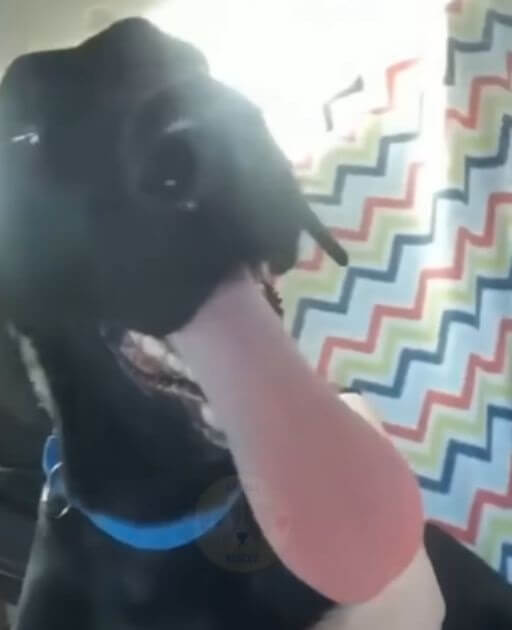
Videos from his new home show a dog running through a yard, chasing toys, and sleeping deeply in a warm bed. The gaunt frame is gone. The infections are gone. The fear still flickers at loud bangs or sharp movements, but he recovers quickly because he isn’t alone anymore.
He’s loved.
He’s protected.
He’s home.