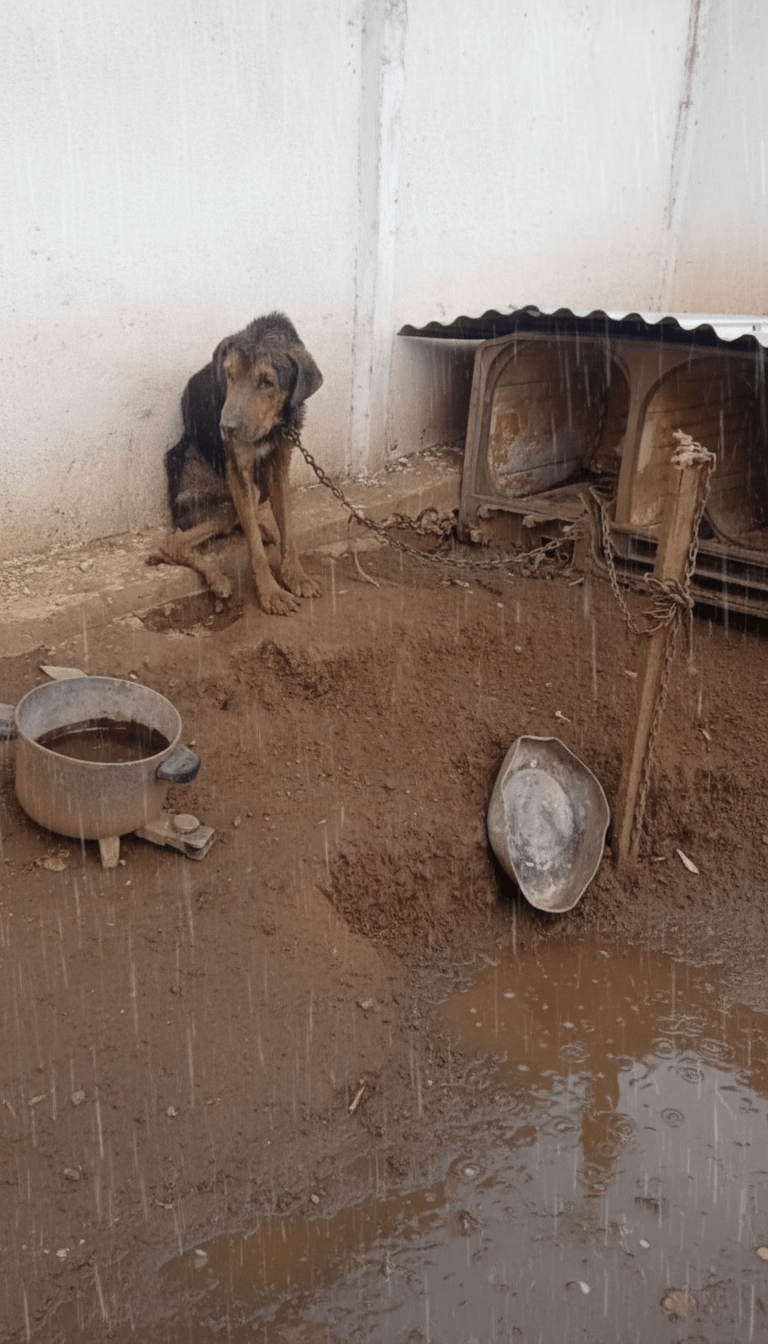
The relentless downpour hammered the corrugated metal roof of the makeshift shelter, a hollow, drumming sound that seemed to match the emptiness in the dog’s eyes. The photo that had been sent to my phone was grainy, but the reality was far worse. There he sat, tethered by a heavy, rusted logging chain to a wooden stake driven into the sludge of a neglected backyard. The rain had turned the earth into a soup of cold mud, and he was sitting right in the middle of it, resigned to the deluge.

As I approached the fence line, the smell of wet earth and neglect hung heavy in the cold air. He didn’t bark. He didn’t even lift his head. The description I had been given was painfully accurate: He was frail, underweight, with thin patches of fur, and most heartbreakingly, his spirit seemed completely shattered. He looked less like a living animal and more like a discarded object, waiting for the earth to reclaim him.
I knew I couldn’t just grab him. A dog in this state of terror could snap out of fear, or worse, collapse entirely. I needed to gain access, which meant confronting the owner.
The twist came not in the form of a violent confrontation, but an indifferent one. A man stumbled out of the back door, annoyed by my presence in the rain. When I pointed to the dog, he shrugged. “He’s useless anyway. Won’t hunt. Just sits there.” It took twenty dollars and a promise never to return for him to unlock the padlock on the heavy chain.
The moment I knelt in the mud beside the dog, the true extent of his misery became clear. He was trembling violently, not just from the cold, but from a deep-seated terror of human proximity. Up close, I could see the sores where the heavy chain rubbed his thin neck.
I managed to free him from the weight of the chain, but he wouldn’t move. He had forgotten how to walk freely. I had to lift his emaciated body—he felt lighter than a bag of groceries—and carry him to my car. He didn’t struggle; he just went limp, a dead weight of despair.

The drive to the emergency vet was agonizingly silent. He lay in the back seat wrapped in towels, staring blankly at the car ceiling. The vet’s assessment was grim: severe malnutrition, a heavy parasitic load, and a raging fever from an untreated infection. The first night was touch-and-go. We weren’t sure his small, weakened heart could handle the strain of recovery.
But he survived the night. We named him “River,” for the torrents of rain he had endured. The physical healing began with fluids and antibiotics, but the mental wounds were profound. For the first week at the clinic, River sat in the back of his clean, warm kennel, exactly as he had sat in the mud: hunched over, eyes averting all contact. He was warm and dry, but his spirit remained out in the cold.
The real breakthrough didn’t happen with medicine; it happened with patience and a piece of cheese. I spent hours sitting on the floor outside his kennel, just reading a book, ignoring him, letting him get used to a human presence that didn’t demand anything of him. One afternoon, I slid a small piece of cheddar cheese through the bars. He stared at it for ten minutes. Then, with agonizing slowness, he crept forward, took the cheese, and retreated.
The next day, he took it from my hand.
It took months for River to learn how to be a dog. He had to learn that a raised hand wasn’t a threat, that a leash meant a walk and not captivity, and that soft beds were for sleeping, not for cowering under.
Today, River is unrecognizable from the frail creature in the mud. His fur is thick and glossy, and he is at a healthy weight. He lives with a loving family who understands his past. He still has his quirks—he dislikes sudden loud noises and prefers to stay indoors when it rains—but the shattered spirit is gone. In its place is a quiet resilience, and in his eyes, you no longer see the emptiness of the muddy yard, but the calm warmth of a dog who finally knows he is home.