The smell of decay and abandonment hung heavy in the air of the derelict warehouse. It was a place where hope came to die, but for Mark, a volunteer with a local animal rescue, it was just another Tuesday night patrol. His flashlight beam cut through the darkness, revealing piles of discarded junk and the skeletal remains of a building long forgotten. He almost missed it—a small, brownish lump curled up in a corner on a pile of filthy rags.

As he approached, his heart sank. It was a dog, but it barely looked like one. Every rib, every vertebra, every bone in its body was visible through its paper-thin skin. Its eyes were closed, and its breathing was so shallow that for a moment, Mark thought he was too late.
Gently, he scooped the fragile creature into his arms. The dog, too weak to protest or even lift its head, was a featherweight. Mark rushed him to the nearest emergency vet, a knot of dread tightening in his stomach. He had seen many cases of neglect, but this was among the worst.
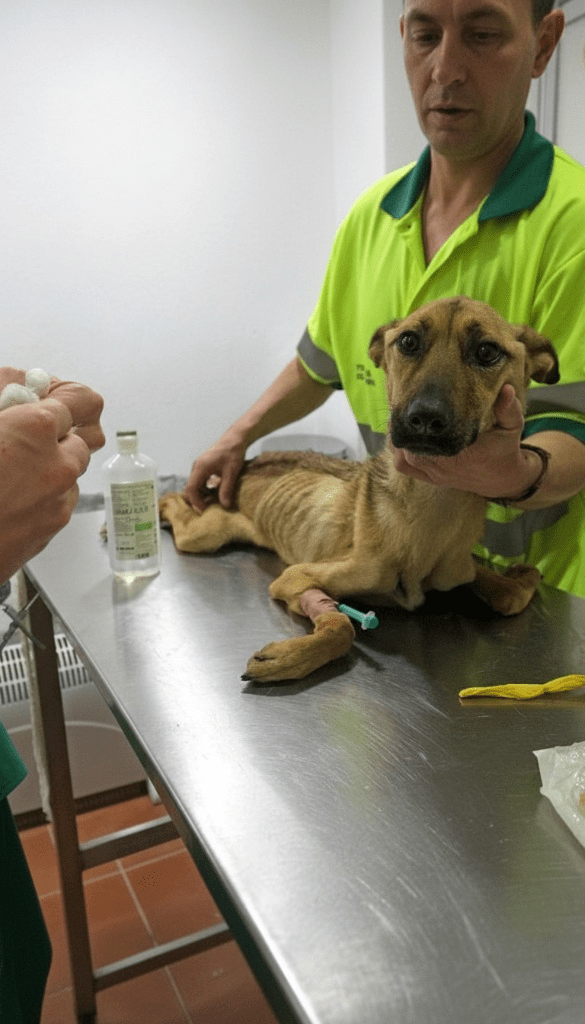
At the clinic, the veterinary team sprang into action. They carefully placed the dog on the examination table, his body a stark testament to the cruelty he had endured. Mark gently held his head, whispering words of comfort as the vet, Dr. Evan, began his assessment. The initial diagnosis of severe starvation was obvious, but a quick blood test revealed a more insidious enemy: a severe, advanced case of a tick-borne disease that was attacking his red blood cells. The starvation had weakened him, but the disease was actively killing him.

“He has a 10% chance, Mark,” Dr. Evan said, his voice grave as he prepared an IV. “His body is shutting down. We can try, but you need to be prepared for the worst.”
The next few days were a blur of sleepless nights and constant worry. The dog, whom Mark named Phoenix, was placed in an intensive care kennel. Mark visited him every day, sitting by his cage for hours, just talking to him, letting him know he wasn’t alone. There were moments when Phoenix’s breathing would falter, and Mark would hold his breath, fearing the end had come. But then, a small twitch of an ear, a slight shift in his posture, would signal that the fight was not over.
It was on the fifth day that the miracle happened. Mark arrived at the clinic to find Phoenix sitting up, his eyes brighter than they had been since the rescue. When Mark approached the cage, the dog’s tail gave a feeble, yet unmistakable, wag. It was the most beautiful thing Mark had ever seen.
From that day on, Phoenix’s recovery was slow but steady. He began to eat on his own, and the sparkle in his eyes grew brighter with each passing day. The bond between man and dog, forged in the shadow of death, became unbreakable. When the time came for Phoenix to leave the clinic, there was only one place he was going: home with Mark.

Today, Phoenix is a far cry from the bag of bones Mark found in the warehouse. He is a healthy, happy dog who loves long walks and cuddling on the couch. His story is a testament to the resilience of animals and the incredible power of compassion. He is a living, breathing miracle, a phoenix that truly rose from the ashes.