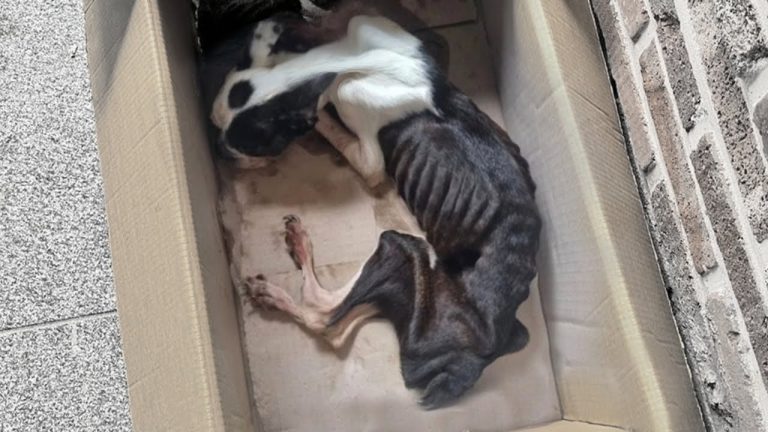
When Scarlett was first found, she wasn’t even called Scarlett. Her original name was Hulk—a name that didn’t reflect her fragile state or gentle spirit. She had been left behind after her owner passed away, with no one in the family willing to take her in. Alone and forgotten, Scarlett was left to waste away in silence. Her ribs protruded sharply from her sides. Every bone in her tiny body could be counted. There was no muscle, no fat—just a shell of what she once was.
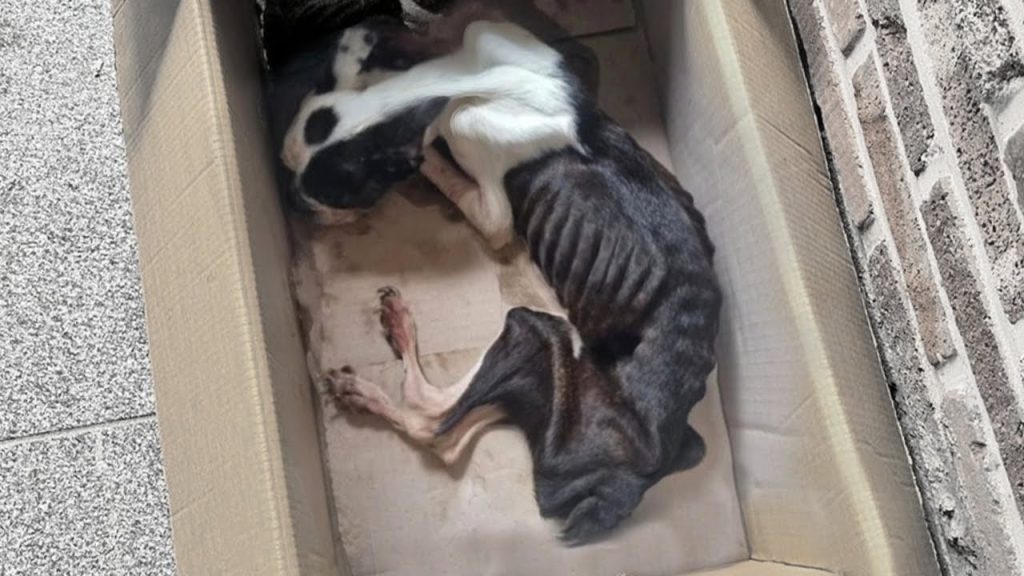
She was so weak she couldn’t even lift her head. When rescuers arrived, she lay motionless, unable to respond, too exhausted to show fear or hope. Her eyes were dull and lifeless, and it seemed like she had already given up. The rescuers knew they had arrived just in time. Any later, and she may not have made it through the night.
Scarlett was rushed to a veterinary clinic, where the team immediately began life-saving care. She was placed on IV fluids to combat dehydration, and because she was too frail to eat, a feeding tube was inserted. Her body was shutting down, but there was still a faint pulse of life—something in her that refused to quit. Despite her skeletal appearance and critical condition, tests came back negative for major infectious diseases. That gave the team hope. It meant that if they could stabilize her and provide her with the right care, there was a real chance she could survive.
The early days were incredibly difficult. Scarlett had to be monitored around the clock. She couldn’t walk, couldn’t eat, and could barely move. The staff and volunteers took turns sitting with her, whispering comforting words, gently stroking her thin fur, and encouraging her to hang on. There was no miracle overnight transformation. Her progress was slow—so slow that many might have overlooked the tiny victories. But those caring for her saw every twitch of her paw, every blink of her eyes, as a step forward.
Scarlett’s jaw and facial muscles had wasted away so severely that even chewing was a challenge. At first, she didn’t have the strength or coordination to eat without help. But day by day, she began to change. Her eyes started to brighten. Her ears perked up at the sound of familiar voices. And then, one day, she licked a spoon of food on her own. That moment, small as it may seem, was monumental.
As weeks passed, Scarlett began to regain her strength. With the love and patience of her caregivers, she started eating without the tube. Her body responded—slowly building back lost muscle, filling out her frame, and warming with life. And then came the day everyone had been waiting for: Scarlett stood up. It wasn’t a graceful stance; she wobbled and struggled, but she stood. And after that, she walked. Her tail wagged for the first time, and her eyes—once hollow and tired—sparkled with joy.
The transformation was nothing short of extraordinary. Scarlett blossomed from a forgotten, emaciated soul into a playful, affectionate dog. She no longer cowered in the corner. Instead, she sought out cuddles, leaned into the touch of a loving hand, and followed her caregivers with trust in her eyes. Her spirit, once crushed by neglect, had come roaring back.
But more than just a story of rescue, Scarlett’s journey is a story about second chances. It’s about what can happen when we refuse to look away. When we stop seeing animals like Scarlett as “someone else’s responsibility” and instead take action. Her recovery didn’t happen because of a miracle. It happened because people cared. Because someone showed up. Because love was offered, even when the situation seemed hopeless.
For many older adults, especially those who’ve experienced loss or loneliness, Scarlett’s story resonates deeply. It’s not just about a dog; it’s about the enduring power of compassion. It reminds us that healing is possible—no matter how broken something might seem. And it also reminds us that age doesn’t lessen the need for connection, nor does it diminish our capacity to give or receive love.
Scarlett was eventually renamed to reflect the fire within her—the spark that refused to go out. Her new name suited her perfectly. She wasn’t Hulk, the name of strength through power. She was Scarlett: strong through grace, endurance, and the quiet fight to live.
Today, Scarlett is unrecognizable from the dog she once was. Her coat has filled in, her frame is healthy, and she plays like any other dog. But if you look closely, you’ll still see traces of her past—gentle reminders of how far she’s come. And perhaps that’s what makes her so special. She carries her story in her eyes, and those who meet her can’t help but be moved by it.
Scarlett’s story is a tribute to all the animals waiting in silence, hoping someone will notice. It’s a call to kindness, a reminder that we all have the power to make a difference. Whether it’s through adoption, fostering, donations, or simply sharing a story like hers—every action matters.
So the next time you see a rescue story, don’t scroll past. Pause. Reflect. Because you never know which life you might help save—or how that life might just end up saving you, too.