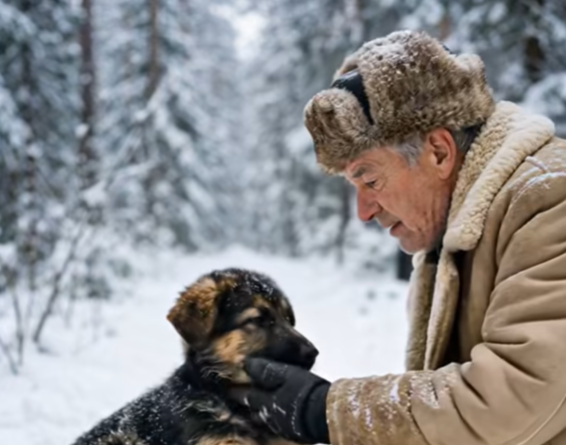
After two decades in forestry, I thought I understood the forest completely. Fires, illegal traps, wounded animals, and the ugliness people are capable of when no one is watching—I had seen all of it. Experience hardens you. It convinces you that nothing can truly shake you anymore. That confidence died on a bitter winter morning when the forest showed me something I was not prepared to face.
I shut the door of my aging patrol car and felt the cold bite through my jacket instantly. The kind of cold that doesn’t just chill your skin but creeps into your bones. The forest stood silent, heavy, as if holding its breath. I had driven these routes thousands of times. Every turn, every clearing, every crooked tree was familiar. Still, that morning, something felt wrong. Not danger exactly—something worse. A quiet warning I couldn’t explain.
I steered off the main road onto a narrow, half-forgotten track barely visible beneath frost and fallen leaves. That’s when I heard it.
It wasn’t a bark. It wasn’t a howl. It was a thin, broken sound, sharp enough to make my chest tighten. A cry filled with panic and pain, too fragile to belong to a wild animal. I cut the engine. The forest swallowed the sound of the car, and the cry came again—closer now, clearer, unbearable.
Wild animals don’t cry like that. Even when trapped or dying, they sound different. This was something else.
I grabbed my flashlight and stepped into the trees. The beam cut through branches and mist as I followed the sound deeper into the woods. With every step, the feeling in my gut grew heavier. I rounded a bend and stopped dead.
On the cold, wet ground sat a tiny puppy. No more than a month old. Its fur was soaked and matted with dirt, its body shaking violently from the cold. It should have been running, hiding, or crying out for its mother. Instead, it sat perfectly still, pressed against an old sack.
The puppy looked at me with enormous dark eyes—eyes that didn’t beg, didn’t threaten, didn’t flee. They watched me with raw desperation.
When I took a step closer, the puppy whimpered and flattened itself against the sack, wrapping its small body over it protectively. It was trying to shield it from me. From the cold. From everything.
That’s when it hit me. The puppy wasn’t lost. It hadn’t wandered here. It had been left—and it was guarding something.
I crouched slowly, speaking softly, careful not to frighten it. The puppy trembled but didn’t move away. I reached for the sack and felt it shift slightly under my fingers.
My heart slammed into my ribs.
The sack wasn’t empty. Whatever was inside wasn’t solid. It was warm. Barely.
My hands shook as I loosened the knot. For a moment, I hesitated. Some instinct screamed that whatever I was about to see would stay with me forever. I opened the sack.
Inside was a baby.
So small it barely seemed real. Wrapped in a thin, soaked blanket that offered no protection from the cold. The baby’s skin was pale, almost gray, lips tinged blue. Its chest rose and fell so faintly I had to hold my breath to be sure it was breathing at all.
I nearly lost my balance.
At my feet, the puppy let out a soft whimper and pressed closer, as if trying to crawl back inside the sack, as if its tiny body could somehow keep the child alive. And in that moment, everything made sense. That puppy had been lying against the sack all night, giving what little warmth it had to the baby.
Without it, the child would have died before dawn.
There was no time to think. I tore off my jacket, wrapped the baby tight, and pressed it against my chest, feeling the faint, stubborn heartbeat beneath the fabric. I scooped up the puppy and ran. I don’t remember feeling the cold. I don’t remember the distance. I only remember the sound of that fragile breathing against my skin.
At the hospital, the doctors moved fast. Later, one of them told me it had been minutes—maybe less. Any longer, and there would have been nothing to save. The baby lived because it had been kept warm. Because a small, shivering puppy had refused to leave.
The truth came out days later.
The mother was found quickly. She lived on the edge of survival, crushed by poverty, isolation, and exhaustion. She had just given birth to her seventh child. No money. No help. No strength left to fight. She took the baby into the forest, placed it in a sack, and walked away, hoping the cold would end it quickly. In her mind, it was mercy.
I don’t excuse what she did. I understand how desperation can rot judgment, but understanding doesn’t erase responsibility.
What I can’t forget is the puppy.
No one taught it compassion. No one explained duty or sacrifice. It stayed. It guarded. It gave everything it had without hesitation, without fear, without asking why.
I’ve seen human cruelty in the forest many times. That morning, I saw something else too. Proof that kindness doesn’t require reason. Sometimes it just exists—small, trembling, and powerful enough to save a life.