People have very different relationships with money. Some believe life is meant to be enjoyed and spend freely on experiences, travel, and comforts. Others prefer to save whenever possible, convinced that every dollar put aside today could prove valuable tomorrow.
Being financially responsible is generally a positive trait. However, when frugality turns into an obsession, it can create unusual situations that affect not only the saver but also their family and friends.
Extreme penny-pinchers often take pride in finding ways to avoid spending money, even when the effort involved outweighs the savings. They may drive miles to save a few cents, collect items others would throw away, or develop creative strategies to get things for free.
The following collection of real-life stories, shared online by people who lived with exceptionally frugal relatives, reveals just how far some individuals will go in their quest to save money. Some stories are hilarious, others surprising, and a few are almost impossible to believe.
One father discovered that water-filter sales representatives often used a fresh bar of soap during demonstrations. Instead of purchasing a filter, he invited multiple companies to his home solely to collect the free soap they left behind. Years later, he still considered it one of his greatest achievements.
Another parent guarded paper towels as if they were priceless treasures. When an entire roll was used to clean a kitchen accident, he stood silently staring at the empty tube, visibly mourning what he considered a significant loss.
Some frugal habits bordered on extreme. One man refused to use a clothes dryer, even during freezing winter weather. He searched endlessly for cheaper gas stations, collected recyclable materials from family trash cans, and attempted unusual fuel-saving driving techniques that terrified his children.
Others became experts at taking advantage of store policies. One father successfully returned outdoor furniture that had been used for nearly a decade, receiving enough credit to purchase a replacement set.
Grandparents often appeared among the most dedicated money-savers. One grandmother preserved warranty paperwork for household appliances for more than sixty years, proudly redeeming guarantees decades after purchase. Another treated restaurant visits as strategic missions, leaving with coupons, leftovers, napkins, and enough supplies to maximize every dollar spent.
One family replaced ordinary bathroom tissue with giant commercial-sized toilet paper rolls normally found in public buildings. While the savings were real, visitors often felt as though they had walked into an airport restroom rather than a private home.
In another case, a father purchased a severely neglected house simply because it cost less upfront. Although renovations eventually exceeded the money he saved, he remained convinced he had made a brilliant financial decision.
Summer heat inspired another level of frugality. One family endured sweltering temperatures because their father refused to turn on air conditioning until conditions became unbearable. He even transformed the house into what looked like a makeshift fortress to keep cool air inside.
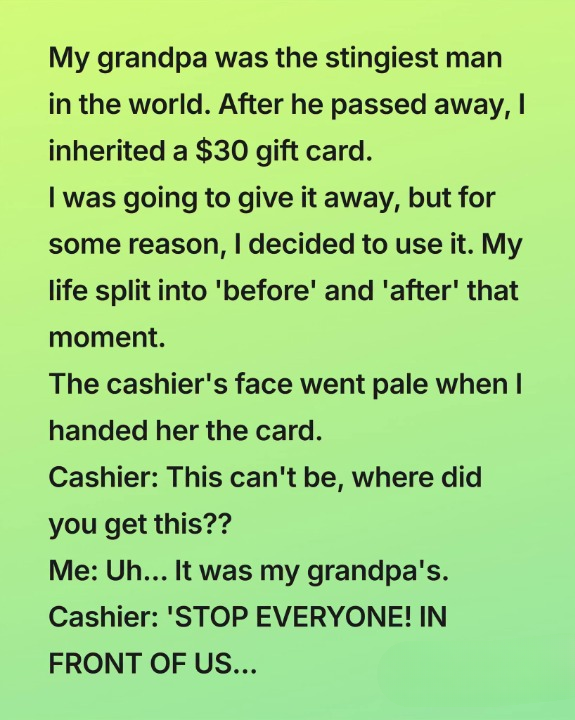
One of the most unexpected stories involved a gift card inherited from a notoriously cheap grandfather. What appeared to be a modest card later turned out to contain an unclaimed sweepstakes prize worth a fortune, transforming a simple keepsake into a life-changing surprise.
Many penny-pinchers also developed unusual collecting habits. Some saved every ramen seasoning packet, ketchup packet, and condiment container they encountered. Others stored old engines, spare parts, bricks, and broken appliances for years, convinced they might someday prove useful.
Several stories reflected difficult financial circumstances rather than simple stinginess. One family reused bathwater to reduce utility bills, while another constantly searched for creative ways to stretch limited resources.
Sometimes the desire to save money led to questionable ideas. One father suggested using a dog bed instead of purchasing a baby crib. Another proudly offered a decades-old doll crib as a sleeping space for his newborn granddaughter.
Holiday traditions also revealed surprising examples of thriftiness. Some families exclusively purchased discounted wrapping paper with printing defects, while others carefully preserved gift boxes for decades, treating them as treasured possessions.
Even condiments weren’t safe from extreme cost-cutting measures. One mother regularly diluted ketchup, barbecue sauce, and salad dressing with water to make them last longer, creating mixtures her children remembered for years.
The final story carried a deeper mystery. A young woman who had always received very little from her wealthy parents discovered a letter claiming that a hidden inheritance rightfully belonged to her. The message suggested that family secrets had been concealed for years and hinted that her entire understanding of her past might soon change.
Together, these stories show that while saving money can be wise, taking frugality to the extreme often creates unforgettable—and sometimes unbelievable—moments. Some examples are humorous, some are inspiring, and others reveal how complicated the relationship between money and family can become.
:::