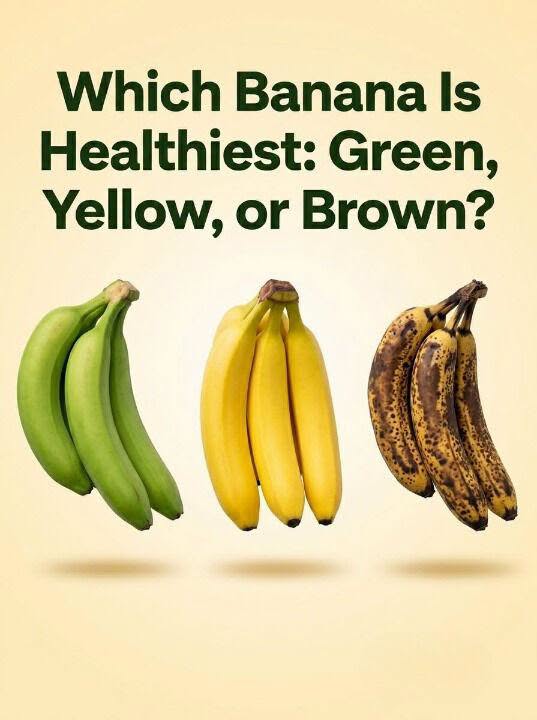
Green, Yellow, or Brown Bananas? Here’s How Their Health Benefits Differ
Bananas are enjoyed around the world because they’re affordable, convenient, naturally sweet, and packed with nutrients. But as a banana changes from green to yellow and eventually brown, its nutritional properties also change.
The main difference comes from what happens to the starch inside the fruit as it ripens. Much of the starch gradually breaks down into natural sugars, changing the banana’s taste, texture, and how quickly it is digested.
 How Ripeness Changes a Banana
Green Bananas
Green bananas contain more resistant starch, which behaves similarly to dietary fiber.
- May support healthy digestion
- Can help you feel full for longer
- Digests more slowly than the sugars in ripe bananas
- Generally produces a slower rise in blood sugar
Yellow Bananas
As bananas turn yellow, more of their starch converts into natural sugars such as glucose, fructose, and sucrose.
- Sweeter and softer
- Provides readily available energy
- Still contains useful fiber and nutrients
- A good everyday choice for most people
Brown Bananas
Very ripe bananas are softer, sweeter, and generally easier to digest. Ripening also changes the levels of various plant compounds, including antioxidants.
- Softer and easier to eat
- Contains antioxidant compounds
- Provides vitamin C and vitamin B6
- Useful for baking, smoothies, and other recipes
What About Digestion?
If you have a sensitive stomach, a fully ripe banana may be easier to tolerate because it has a softer texture and less resistant starch.
Bananas also provide soluble fiber, which can support normal bowel function and overall digestive health.
How Ripeness Affects Blood Sugar
The riper a banana becomes, the more of its starch has been converted into sugar.
Green bananas generally digest more slowly, while ripe bananas can raise blood sugar more quickly.
If you’re eating a ripe banana and want a more balanced snack, pairing it with protein or healthy fats can help slow digestion.
Are Brown Bananas Healthier?
Not necessarily.
Brown bananas can contain more of certain antioxidant compounds, while green bananas provide more resistant starch. Yellow bananas sit somewhere in between and offer a convenient balance of sweetness, fiber, and nutrients.
So there isn’t one universally “healthiest” banana—the best choice depends on your nutritional goals, digestion, and personal preference.
Quick Comparison
| Banana Stage | Main Benefit | Best For |
|---|---|---|
 Green Green |
More resistant starch, less sugar | Fullness and slower digestion |
 Yellow Yellow |
Balanced sweetness and nutrients | Everyday eating and energy |
 Brown Brown |
Softer texture and more ripe-fruit antioxidants | Easier digestion and baking |
One important note: some people can experience reactions to bananas, particularly those with latex-fruit syndrome.
Bottom Line
Don’t throw away those brown bananas just because they look overripe. They can still be nutritious and are especially useful in smoothies, oatmeal, and baked goods.
Green, yellow, or brown—the “best” banana depends on what your body and diet need most.
The best banana depends on your goal, with green bananas better for slower digestion and brown bananas better for softness and ripe-fruit antioxidants when those benefits matter most.