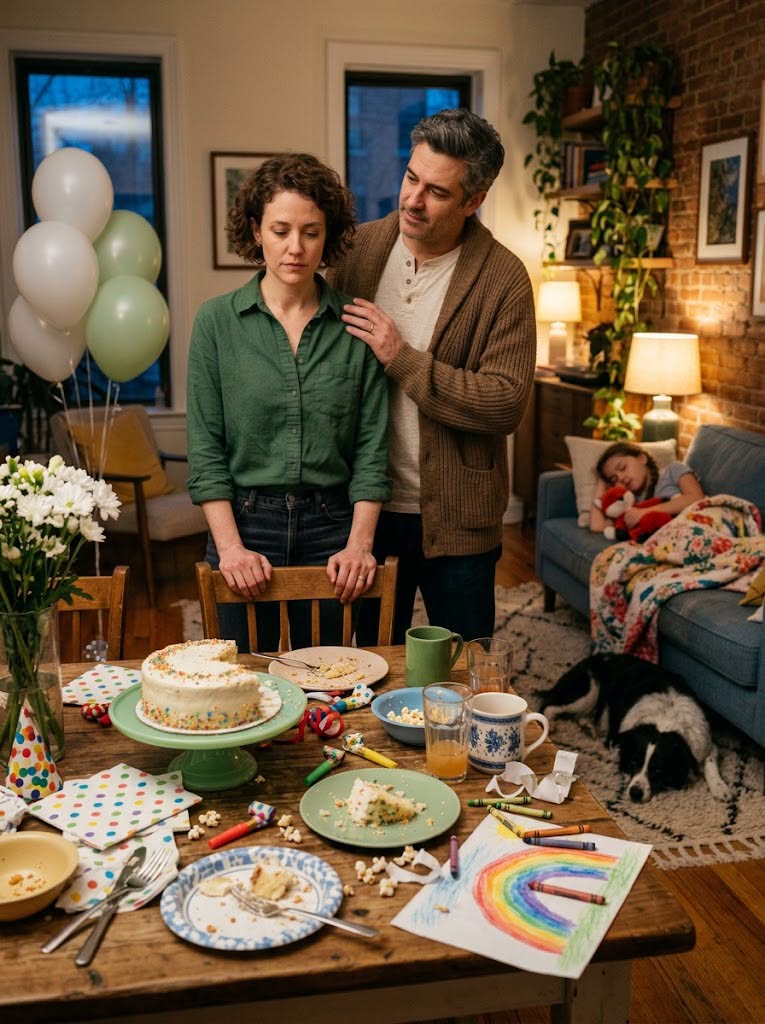
My son Owen was turning ten, and we had planned a simple celebration at his favorite local Italian , Bellucci’s, where the owner always made him feel special. We were expecting my , Linda and Walter, along with my younger sister Whitney, her husband Paul, and their two children, Mason and Sophie. Just ninety minutes before we were supposed to meet, my mother sent a casual message canceling their attendance without offering any real explanation or citing any emergency. My husband Grant and I tried to salvage the evening by ordering pizza and watching a movie at home, while Owen politely pretended he was not disappointed. Later that evening, while scrolling through social media, I saw a video posted by Whitney showing my entire extended family enjoying an expensive meal at a downtown steakhouse called Harrison and Cole. They were gathered around a large table covered in white linen, eating massive steaks and celebrating what Whitney had captioned as a family night. There had been no scheduling conflict or sudden illness, meaning my parents had simply chosen to skip their grandson’s birthday to go somewhere more upscale.
Seeing my family celebrating without us made me abandon my usual habit of keeping the peace, and I immediately called my mother to confront her about the social media post. With the loud sounds of the steakhouse clearly audible in the background, she sounded more annoyed than guilty when I pointed out they were at a high end restaurant instead of with Owen. She tried to justify their absence by claiming that the steakhouse was an adult environment and that my energetic son might have embarrassed them. When I pointed out that Whitney’s children were present, she dismissed my concern by arguing that they were slightly older and calmer. In that moment, a long history of obvious favoritism suddenly made perfect sense to me, from skipped school concerts to holidays always revolving around my sister’s schedule. Instead of shouting or causing a dramatic scene, I felt a strange sense of absolute clarity about where I truly stood in their lives. I realized I had spent years protecting them from discomfort while they comfortably excluded my family, and I decided right then to stop fixing problems they no longer had.
Two years prior, when my father had his work hours drastically reduced, Grant and I had stepped in to quietly pay their monthly mortgage of two thousand three hundred eighty dollars. We had consistently made those transfers every single month, secretly sending them over fifty seven thousand dollars in total so they would not lose their home. Sitting at my kitchen table, I opened my laptop and permanently canceled the recurring transfer just two days before their next payment was scheduled to process. Early the following morning, a representative from their bank called me as a designated backup contact to warn that without my usual deposit, their upcoming mortgage payment would fail. Shortly after that courtesy call, my mother phoned me in a panic, demanding to know why I had stopped the money they depended on and accusing me of being cruel over a single missed dinner. I refused to accept her guilt trip and forced her to answer whether my father was still working reduced hours, knowing that uttering the actual financial numbers out loud completely changed the nature of our conversation.
My father finally took the phone and confessed that he had returned to full time work almost a year earlier, but they had chosen to keep my monthly payments flowing anyway. He admitted that my mother convinced him to maintain the secret arrangement so they could afford a better lifestyle, which included quietly paying for school expenses for Whitney’s children using my money. Hearing that I was the very lifestyle that excluded my son from his own was painful, but it finally validated everything I had suspected about their priorities. My father took accountability by calling Owen later that evening to sincerely apologize for making a selfish choice, admitting that they had been unfair and had picked the wrong . Whitney also reached out once she learned the massive scale of the financial deception, realizing she had benefited from money she assumed came from a raise my father had received. She came to our house a few days later with a soccer jersey she bought herself, offering Owen a genuine apology for her thoughtless social media post and her failure to check on him.
The final resolution came when my mother arrived at my door with bank statements proving she had misdirected twenty six thousand dollars over eleven months, finally admitting she had taken advantage of my dependable nature. I firmly told her that the financial support was permanently finished, establishing a new boundary that forced them to adjust their spending, sell an extra car, and start paying their own bills again. Without the burden of that massive monthly expense, Grant and I suddenly had the freedom to fund our own family memories, leading us to rent a beautiful lakeside cabin that summer. I realized that true generosity should never require putting my parents’ luxury above my own family’s freedom, and I stopped equating my value as a daughter with my financial usefulness. A year later, we all gathered at the Italian restaurant to properly celebrate Owen turning eleven, and the evening was loud, chaotic, and completely free of the toxic secrets and pretenses that used to define us.